
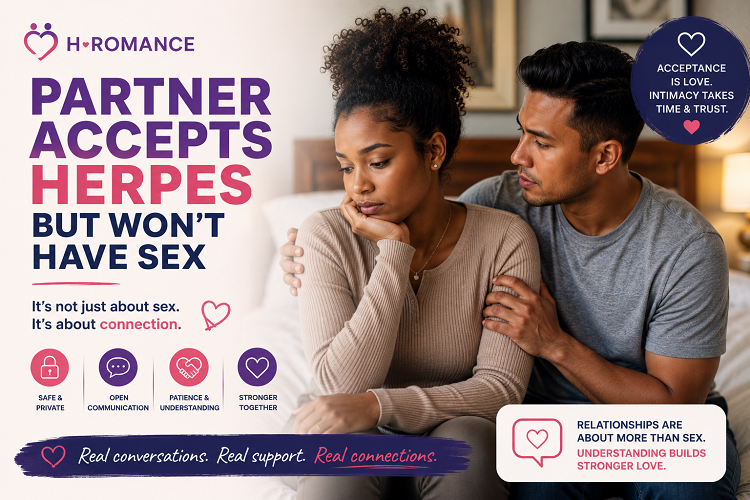
Finding a partner who accepts your herpes diagnosis can feel like a huge relief. You finally open up, share something deeply personal, and instead of rejection, they stay. They care about you. They text you every day. They say they love you. This situation is more common than most people realize.
But then something confusing happens.
They avoid intimacy.
They hug you, kiss you lightly, maybe even cuddle at night, but when things start becoming sexual, they pull away. Suddenly, you are left wondering:
“If they accept me, why don’t they want to sleep with me?”
In many cases, fear, misinformation, anxiety, and emotional pressure are creating invisible walls between both partners.
The good news is that these walls can often be worked through together.
This Happens More Often Than People Admit
One of the biggest misunderstandings about herpes is thinking acceptance automatically removes fear.
It doesn’t.
A partner can genuinely love and accept you while still feeling nervous about physical intimacy. This creates complicated emotions on both sides. The person with herpes may feel unwanted or rejected, while the other partner may feel guilty for being afraid.
This is where many couples silently struggle with herpes relationship problems.
The fear is rarely just about the virus itself. Often, it includes:
- Fear of transmission
- Fear of future outbreaks
- Anxiety about their own health
- Stress around condoms or medication
- Worry about social stigma
- Pressure to “act normal”
- Fear of hurting the relationship
For many people, the emotional side of herpes affects intimacy more than the physical reality.
Understanding the Fear Behind the Distance
When someone becomes distant sexually after disclosure, it usually comes from anxiety rather than disgust.
Many partners simply do not fully understand herpes. Internet myths and horror stories create panic. Even after hearing medical facts, emotions can still overpower logic.
This is especially common with fear of herpes transmission.
A partner may constantly think:
- “What if I catch it?”
- “What happens if we stop using protection once?”
- “Will my life change forever?”
- “Can I fully relax during sex?”
These thoughts can create performance anxiety and emotional hesitation.
That is why Herpes And Sex Anxiety affects both people in the relationship — not just the diagnosed partner.
Acceptance Does Not Always Mean Readiness
Some people emotionally accept herpes faster than they physically adjust to it.
This is important to understand.
A partner saying:
“I’m okay with it”
does not necessarily mean:
“I’m emotionally ready to stop worrying.”
For many couples, Intimacy After Herpes Disclosure becomes a gradual process instead of an immediate return to normal.
Trust takes time.
Confidence takes time.
Emotional safety takes time.
And unfortunately, many people pressure themselves into pretending they are comfortable before they actually are.
The Emotional Impact on the Partner With Herpes
If you are the one diagnosed, this situation can become emotionally exhausting.
You may start thinking:
- “They don’t desire me anymore.”
- “I ruined the relationship.”
- “I’ll never feel normal again.”
- “They’re forcing themselves to stay.”
Over time, rejection anxiety can become stronger than the herpes diagnosis itself.
Many people dealing with Dating With Herpes Intimacy Issues experience lower self-esteem even when their partner remains emotionally supportive.
The emotional contradiction hurts:
“They love me… but they avoid me physically.”
This can lead to loneliness inside the relationship.
Communication Is the Most Important Part
Avoiding the conversation usually makes the situation worse.
Instead of guessing your partner’s fears, create a safe space to talk honestly without blame.
Do not approach the discussion with anger like:
- “Why don’t you want me?”
- “You said you accepted it.”
- “Are you disgusted by me?”
These statements often make the other person feel defensive.
Instead, try conversations built around understanding:
- “I want to understand what you’re feeling.”
- “What worries you the most?”
- “What would help you feel safer?”
- “Can we learn about this together?”
Healthy communication is one of the strongest forms of Herpes Relationship Advice experts consistently recommend.
Herpes Is Emotional Before It Is Physical
One thing couples often overlook is the emotional weight herpes carries because of stigma.
The virus itself is medically manageable for most people. But emotionally, it can create shame, fear, and silence.
This affects Herpes And Emotional Intimacy in major ways.
Sometimes the partner without herpes becomes afraid of saying the wrong thing. Other times, the diagnosed partner becomes hyperaware of rejection signs.
Both people may start emotionally protecting themselves instead of connecting honestly.
That emotional distance can eventually affect physical closeness.
What Actually Helps Couples Rebuild Intimacy
There is no overnight solution, but many couples slowly rebuild a healthy sex life through patience and reassurance.
Here are some things that genuinely help:
Learning the Facts Together
Fear decreases when people understand actual transmission risks.
Many couples feel calmer after discussing:
- antiviral medication
- condom use
- avoiding intimacy during outbreaks
- asymptomatic shedding
- realistic transmission statistics
Education helps replace panic with informed decision-making.
Removing Pressure Around Sex
Pressure kills intimacy quickly.
If every romantic moment feels like it “must” lead to sex, anxiety grows stronger.
Sometimes couples reconnect faster when they focus on:
- cuddling
- kissing
- sleeping close together
- emotional conversations
- physical affection without expectations
This rebuilds trust and comfort naturally.
Community Experiences Show You Are Not Alone
Across online support communities and relationship forums, thousands of couples discuss similar struggles involving sex after herpes diagnosis.
Many people admit that intimacy became awkward temporarily after disclosure, even in healthy relationships.
Some common themes shared include:
- needing time to process emotionally
- struggling with anxiety during intimacy
- overthinking transmission risks
- feeling guilty for being afraid
- eventually rebuilding a normal sex life through communication
Community discussions consistently show that fear often fades once couples create trust, education, and emotional security together.
When Fear Starts Damaging the Relationship
While patience matters, emotional avoidance cannot continue forever without discussion.
If your partner completely refuses intimacy long-term without communication, deeper relationship issues may exist beyond herpes.
Ask yourself:
- Are they willing to talk openly?
- Are they making efforts to learn?
- Do they show affection in other ways?
- Is the relationship emotionally healthy overall?
Sometimes herpes becomes the visible issue hiding deeper fears about vulnerability, commitment, or emotional connection.
You Should Never Feel “Untouchable”
One of the hardest parts of this experience is feeling unwanted.
But herpes does not make someone dirty, unsafe, or undeserving of love and intimacy.
Many people in long-term relationships with herpes maintain healthy sex lives, marriages, and families.
If your partner is struggling emotionally, that does not define your worth.
This matters deeply because a Partner Afraid Of Herpes situations often trigger shame in the diagnosed person — even when the fear is not personal.
Remember:
Fear is an emotional response, not a measurement of your value.
Rebuilding Confidence Together
Healing intimacy usually happens in small moments.
Not dramatic speeches.
Not perfect answers.
Just repeated reassurance, trust, emotional safety, and patience.
Couples who successfully navigate herpes relationship problems often focus less on “fixing herpes” and more on strengthening emotional connection.
That means:
- communicating honestly
- respecting boundaries
- learning together
- rebuilding trust slowly
- avoiding shame-based conversations
- supporting each other emotionally
Intimacy grows stronger when both people feel emotionally safe.
FAQ
Can a relationship survive herpes-related intimacy problems?
Yes. Many couples experience temporary anxiety after disclosure and eventually rebuild a healthy emotional and physical connection through communication and education.
Why does my partner accept me emotionally but avoid sex?
This usually comes from anxiety, fear, or misinformation rather than rejection. Emotional acceptance and physical comfort do not always happen at the same speed.
Is this common in relationships involving herpes?
Very common. Many couples dealing with dating with herpes intimacy issues experience periods of emotional hesitation or sexual anxiety after disclosure.
How can we reduce fear around transmission?
Education helps significantly. Understanding medication, protection methods, outbreak management, and real transmission risks often reduces anxiety over time.
Should I feel guilty for having herpes?
No. Herpes is extremely common, and a diagnosis does not reduce your worth, attractiveness, or ability to have healthy relationships.
What if intimacy never improves?
If your partner refuses communication or emotional closeness long-term, the relationship may need deeper evaluation beyond herpes alone.
Final Thoughts
Living with herpes can challenge intimacy, but it does not make love impossible. If you are struggling with “Partner Accepts Herpes But Won’t Have Sex”, remember that fear and emotional adjustment often play a bigger role than rejection.
The path forward usually starts with honesty, patience, emotional safety, and better communication — not shame.
Many couples move through this difficult phase and come out stronger, closer, and more emotionally connected than before.
Herpes may change conversations around intimacy, but it does not erase the possibility of trust, attraction, affection, or a fulfilling relationship.