
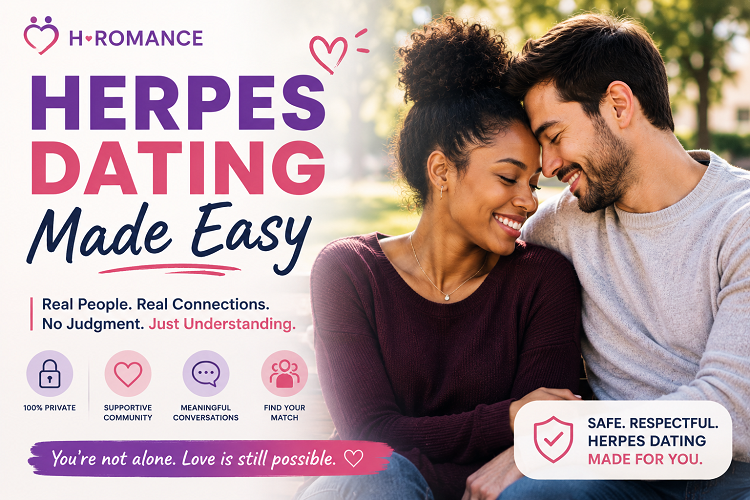
Dating can feel complicated even under the best circumstances. Add a herpes diagnosis into the mix, and it’s easy to assume things just got a lot harder. But here’s the truth most people don’t hear enough: Dating With Herpes is not only possible, it’s often far easier, healthier, and more meaningful than you might expect.
This isn’t just a hopeful idea. It’s based on real experiences, medical facts, and the growing number of people building happy relationships while living with herpes. When you understand what actually matters and let go of the myths, dating starts to feel less like a barrier and more like a normal part of life again.
Understanding the Reality: You’re Not Alone
One of the biggest mental hurdles is the feeling of isolation. Many people think they’re the only one dealing with this, but that couldn’t be further from the truth.
Herpes is incredibly common worldwide. Millions of people live with HSV-1 or HSV-2, and many don’t even realize it. That means the dating pool hasn’t suddenly disappeared—it’s just more invisible than before.
Once you realize how common it is, something shifts. You stop seeing yourself as “different” and start seeing yourself as part of a large, normal group of people navigating relationships just like everyone else.
The Emotional Shift: From Fear to Confidence
At first, fear takes over. Fear of rejection. Fear of judgment. Fear of awkward conversations. But over time, something surprising happens—people grow stronger, more self-aware, and more confident.
Dating with herpes often forces you to communicate more openly. And that’s not a weakness—it’s a strength. Instead of casual, unclear connections, you build relationships on honesty from the start.
Many people say that after their diagnosis, their dating life actually improved. Why? Because they stopped chasing validation and started focusing on genuine compatibility.
Disclosure Isn’t as Scary as It Seems
Let’s be real—this is the part everyone worries about. Telling someone you have herpes can feel intimidating. But in practice, it’s usually much less dramatic than imagined.
When handled calmly and honestly, disclosure often leads to understanding rather than rejection. Most people appreciate transparency, especially when it’s paired with accurate information.
The key is how you approach it. When you speak with confidence and without shame, the other person is more likely to respond the same way. You’re not asking for permission, you’re sharing something important about your health.
And here’s something many don’t expect: rejection happens in dating anyway, with or without herpes. The difference is that herpes helps filter out people who aren’t right for you faster.
The Role of Education: Breaking the Stigma
A lot of fear around herpes comes from misinformation. When people actually learn the facts, their perspective changes.
Herpes is manageable. Transmission can be reduced significantly with precautions. Outbreaks are often mild and less frequent over time. For many, it becomes a small part of life—not a defining one.
When you share accurate information with a partner, it replaces fear with understanding. And understanding builds trust.
Dating Apps and Communities Make It Easier
One major advantage today is access to herpes-friendly dating platforms and supportive communities. These spaces remove the pressure of disclosure upfront and allow people to connect openly.
In these communities, there’s no need to explain or justify. Everyone already understands. That creates a level of comfort and confidence that traditional dating sometimes lacks.
Beyond dating, support groups and forums offer something just as valuable—shared experience. Hearing others’ stories helps normalize your own journey and reminds you that you’re not alone.
Real Connections Over Perfect Image
Modern dating often focuses on appearance, status, or surface-level attraction. But when herpes enters the picture, priorities shift.
People start looking for deeper qualities—kindness, honesty, emotional maturity. And that leads to stronger, more meaningful relationships.
Instead of worrying about being “perfect,” you focus on being real. And that’s where genuine connection happens.
Mental Health and Self-Worth
A diagnosis can shake your confidence at first, but it can also lead to growth. Many people report improved self-esteem over time because they learn to accept themselves fully.
You start to understand that your value isn’t defined by a condition. You’re still the same person—with the same personality, dreams, and ability to love and be loved.
That mindset changes everything. When you believe you’re worthy, your dating life reflects it.
What the Research and Experts Say
Health professionals consistently emphasize that herpes is a manageable condition, not a life-altering barrier. With proper care, communication, and precautions, people with herpes can maintain normal relationships.
Experts also highlight that emotional resilience and communication skills often improve after diagnosis—qualities that are essential for long-term relationship success.
Community Voices: Real Experiences That Matter
Across online communities and support groups, one message comes up again and again, dating gets easier with time.
People share stories of initial fear turning into confidence. Of awkward first disclosures turning into meaningful conversations. Of rejection leading to better matches.
These aren’t rare exceptions. They’re common experiences.
One community member shared how they avoided dating for a year after diagnosis, only to realize later that most of their fears never actually happened. Another described how being upfront helped them find a partner who valued honesty above everything else.
These stories matter because they show what’s possible.
Testimonials (Names Masked for Privacy)
“I thought my dating life was over. I avoided people for months. But when I finally opened up, I realized most people were more understanding than I expected. I’m now in a happy relationship.” – A***, 29
“I was terrified of telling someone. But when I did, he thanked me for being honest. That moment changed how I saw myself.” – R***, 34
“I met my partner through a herpes-friendly platform. There was no fear, no judgment. Just a normal connection.” – S***, 31
“At first, I felt rejected. But looking back, those rejections helped me find someone who truly accepts me.” – M***, 27
Why Dating Can Actually Improve
It might sound surprising, but many people find their dating life becomes more intentional and fulfilling.
You communicate better. You choose partners more carefully. You avoid superficial connections. And you build relationships based on trust.
In a way, herpes filters out what doesn’t matter and highlights what does.
Practical Perspective: What Really Matters
At the end of the day, successful dating comes down to a few core things, confidence, communication, and compatibility.
Herpes doesn’t remove any of these. If anything, it strengthens them.
The right person won’t see you as a condition. They’ll see you as a person. And that’s what dating is supposed to be about.
Frequently Asked Questions
Is dating with herpes really possible?
Yes, absolutely. Millions of people date, form relationships, and get married while living with herpes.
Will I always have to disclose?
Yes, it’s important to be honest with partners. But disclosure becomes easier with time and practice.
What if someone rejects me?
Rejection is a normal part of dating. It doesn’t define your worth, and it often leads you closer to the right person.
Can I have a normal relationship?
Yes. Herpes doesn’t prevent emotional or physical intimacy when managed properly.
Are there safe ways to reduce transmission?
Yes. There are well-known precautions that significantly lower the risk.
Final Thoughts
Dating With Herpes isn’t the end of your romantic life, it’s just a different starting point. Once you move past the fear and understand the reality, you’ll see that connection, love, and happiness are still very much within reach.
In fact, many people discover something unexpected along the way: dating becomes more honest, more meaningful, and more aligned with who they truly are.
And that’s not a limitation—that’s growth.