
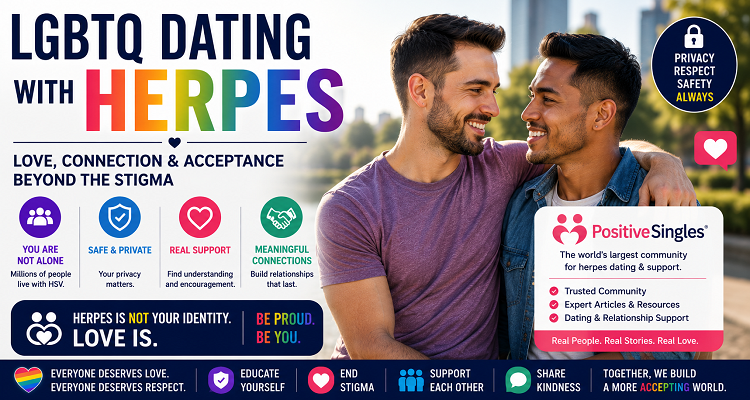
Dating can be complicated for anyone, but for LGBTQ+ individuals living with herpes, there can be additional challenges. Questions about disclosure, fear of rejection, stigma, and misconceptions about sexually transmitted infections (STIs) often create emotional barriers that go beyond the physical condition itself.
The reality is that herpes does not define a person’s worth, attractiveness, or ability to build meaningful relationships. Yet many LGBTQ+ singles still worry about how their diagnosis may affect dating experiences. Let’s explore the facts, the challenges, and practical ways to navigate dating confidently while living with herpes.
Understanding Herpes: The Facts Matter
Before discussing dating, it’s important to understand what herpes actually is.
Herpes simplex virus (HSV) is one of the most common viral infections worldwide. There are two primary types:
- HSV-1: Commonly associated with oral herpes but can also cause genital herpes.
- HSV-2: Most commonly associated with genital herpes.
According to the World Health Organisation (WHO), billions of people worldwide live with HSV-1, while hundreds of millions have HSV-2. Many people who carry the virus experience mild symptoms or no symptoms at all.
Why Herpes Can Feel More Challenging in LGBTQ+ Dating
The difficulties associated with herpes are often emotional and social rather than medical.
1. Fear of Rejection
One of the biggest concerns among LGBTQ+ singles with herpes is disclosure.
Many people worry:
- “Will they stop talking to me?”
- “Will they think I’m irresponsible?”
- “Will they reject me immediately?”
These fears can lead individuals to avoid dating altogether or delay forming meaningful connections.
Research consistently shows that anticipated stigma often causes more distress than the condition itself.
2. Existing LGBTQ+ Dating Challenges
Many LGBTQ+ individuals already navigate:
- Limited dating pools
- Discrimination
- Identity-based stigma
- Concerns about sexual health
Adding a herpes diagnosis can sometimes feel like another obstacle.
For people living in smaller communities or conservative regions, concerns about privacy and judgment may be even stronger.
3. Misunderstanding and Misinformation
Despite being common, herpes remains one of the most misunderstood health conditions.
Common myths include:
- Only promiscuous people get herpes.
- Herpes always causes visible symptoms.
- Relationships are impossible after diagnosis.
- Transmission is guaranteed.
None of these statements is true.
Accurate education is one of the most effective ways to reduce fear and stigma.
The Unique Impact on LGBTQ+ Communities
The LGBTQ+ community has historically emphasized sexual health awareness, testing, and open conversations about STI prevention.
While this awareness is beneficial, it can sometimes create additional anxiety around disclosure.
Gay and Bisexual Men
Some gay and bisexual men report concerns that disclosing herpes may affect dating opportunities on apps or within close-knit social circles.
However, many LGBTQ+ health organisations emphasise that herpes is manageable and should not be viewed as a moral failing.
Lesbian and Bisexual Women
Women in same-sex relationships may incorrectly assume herpes transmission is impossible between female partners.
In reality, HSV can be transmitted through skin-to-skin contact regardless of sexual orientation.
Open communication remains essential.
Transgender and Non-Binary Individuals
Transgender and non-binary people often face healthcare barriers and social stigma unrelated to herpes.
A herpes diagnosis can sometimes intensify concerns about acceptance, making supportive communities especially important.
Does Herpes Actually Reduce Dating Success?
The short answer: not necessarily.
Many people living with herpes maintain active dating lives and long-term relationships.
Several factors influence dating success far more than herpes status, including:
- Communication skills
- Emotional intelligence
- Confidence
- Compatibility
- Shared values
People often assume herpes will be a dealbreaker for everyone. In reality, reactions vary widely.
Many potential partners appreciate honesty and transparency.
Some may already have herpes themselves.
Others may be willing to learn more before making a decision.
The Importance of Disclosure
Disclosure is one of the most discussed topics among people living with herpes.
When Should You Tell Someone?
There is no universally correct timeline.
Most sexual health experts recommend discussing herpes before sexual activity occurs.
The conversation should happen:
- In a private setting
- Before intimacy
- Without pressure
- With accurate information
Remember: Disclosure Is About Consent
Disclosure allows both people to make informed decisions.
It also creates a foundation of trust that can strengthen relationships.
How to Reduce Transmission Risk
Many people are surprised to learn that the risk of herpes transmission can be significantly reduced.
Common prevention strategies include:
Antiviral Medication
Prescription antiviral medications can help:
- Reduce outbreaks
- Lower viral shedding
- Decrease transmission risk
Discuss treatment options with a qualified healthcare provider.
Avoid Sexual Contact During Outbreaks
Symptoms may include:
- Sores
- Tingling
- Burning sensations
Avoiding sexual contact during outbreaks significantly reduces transmission risk.
Barrier Protection
Condoms and dental dams can reduce, though not eliminate, transmission risk.
Open Communication
Honest discussions help partners make informed decisions and establish comfort levels.
For updated clinical guidance, consult:
- CDC Herpes Resources
- WHO STI Resources
- Local sexual health clinics
The Mental Health Side of a Herpes Diagnosis
Many newly diagnosed individuals report feelings of:
- Shame
- Anxiety
- Embarrassment
- Isolation
These reactions are common but often improve over time.
Studies suggest that emotional distress following diagnosis is frequently linked to social stigma rather than physical symptoms.
Building Emotional Resilience
Helpful strategies include:
- Looking counseling
- Joining support groups
- Connecting with others who have herpes
- Learning accurate medical information
Mental health support can be especially valuable for LGBTQ+ individuals who may already be navigating identity-related stressors.
Dating Apps and Herpes Disclosure
Modern dating apps have transformed how LGBTQ+ individuals meet partners.
However, herpes disclosure can feel more intimidating in digital environments.
Some people choose to:
- Mention their status early
- Wait until a genuine connection develops
- Use herpes-positive dating communities
There is no one-size-fits-all approach.
The key is ensuring disclosure occurs before sexual activity.
Many people find that honest conversations lead to better outcomes than expected.
Finding Supportive Communities
Supportive communities can make a significant difference.
Benefits include:
- Reduced feelings of isolation
- Shared experiences
- Practical dating advice
- Increased confidence
Whether through online forums, LGBTQ+ support groups, or herpes-focused communities, connecting with others who understand your experience can be empowering.
Challenging the Stigma
The biggest obstacle in herpes dating is often stigma—not the virus itself.
Stigma thrives when people lack accurate information.
The facts show:
- Herpes is extremely common.
- Many people never experience symptoms.
- Effective management options exist.
- Healthy relationships remain entirely possible.
Changing the conversation requires education, empathy, and honesty.
When individuals openly discuss sexual health, misconceptions lose their power.
What Potential Partners Should Know
If you’re dating someone with herpes, consider the following:
- A diagnosis does not define a person.
- Honest disclosure demonstrates responsibility.
- Risk reduction strategies are available.
- Education is more valuable than assumptions.
Healthy relationships are built on communication and informed decision-making.
Final Thoughts
So, does herpes make LGBTQ+ Dating Harder? For some people, yes. Fear of rejection, stigma, and misinformation can create real challenges. However, those challenges are often social rather than medical.
Countless LGBTQ+ individuals living with herpes build fulfilling relationships, enjoy active dating lives, and find partners who value honesty and authenticity.
A herpes diagnosis may change some conversations, but it does not eliminate opportunities for love, intimacy, or connection.
The more we normalize discussions about sexual health, the easier it becomes for everyone to date with confidence and compassion.