
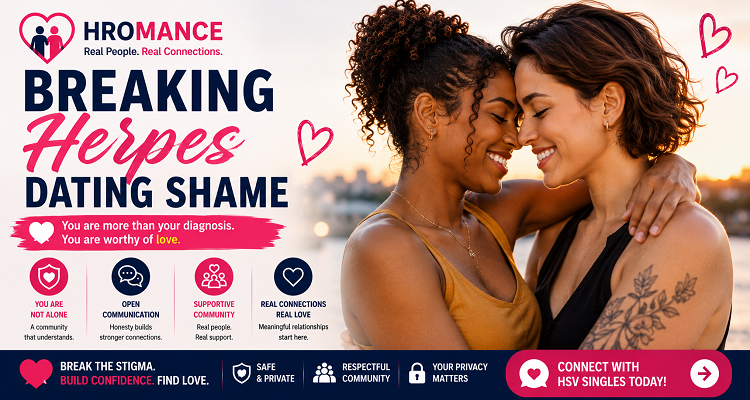
For many people, the hardest part of living with herpes isn’t the virus itself—it’s the shame that often comes with it.
A herpes diagnosis can trigger feelings of embarrassment, fear, anxiety, and self-doubt. Some people worry they’ll never date again. Others fear rejection before they even give someone a chance to know them.
The truth is that herpes dating shame is often fueled by stigma, myths, and misinformation rather than reality. Learning to overcome that shame can be one of the most important steps toward building healthy relationships and a happier life.
Understanding where the shame really comes from
Most of the emotional weight around herpes doesn’t come from symptoms—it comes from stigma. Years of misinformation, jokes in the media, and silence in sex education have shaped how people think about HSV.
People don’t usually fear the condition itself as much as they fear being judged for it.
That’s where the cycle begins: diagnosis → fear → silence → isolation → more fear.
Breaking that cycle starts with one shift: separating your diagnosis from your identity.
You are not your diagnosis. You’re someone navigating dating like everyone else—just with more awareness and responsibility.
What changes when shame is replaced with honesty
When people start to approach dating with openness, something unexpected happens. Rejection doesn’t sting as deeply, and connections feel more real.
Many people report that once they learned how to talk about their status calmly and confidently, their dating life actually improved. Not because everyone said yes—but because the right people responded with understanding instead of judgment.
This is where Herpes Dating Without Shame becomes more than a phrase—it becomes a mindset.
Shame thrives in secrecy. Confidence grows in honesty.
Rewriting the story you tell yourself
A lot of emotional struggle comes from internal dialogue:
- “No one will accept me.”
- “I can’t date like before.”
- “I have to hide this forever.”
But these thoughts are learned, not facts.
People who shift into Overcoming Herpes Dating Shame often start small. They don’t jump into disclosure immediately. Instead, they rebuild self-trust first—how they speak to themselves, how they view intimacy, and how they define worth.
One community member shared:
“I thought my dating life was over. But the real issue wasn’t herpes, it was how I saw myself after the diagnosis.”
That shift in perception is often the turning point.
Dating with confidence is a skill, not a personality trait
Confidence doesn’t mean being fearless. It means being honest even when it feels uncomfortable.
Practical herpes dating confidence tips often include:
People learn to disclose naturally, not dramatically. Choosing partners based on emotional maturity instead of guessing approval. And most importantly, not apologizing for their existence.
Confidence grows with repetition. The first conversation feels heavy. The tenth feels normal. Eventually, it becomes just another part of getting to know someone.
That’s how HSV Dating Confidence Guide principles actually work in real life—not as theory, but through experience.
The role of communication in real connection
Healthy relationships aren’t built on hiding difficult truths. They’re built on communication that feels safe on both sides.
When people learn How To Date With Herpes Openly, something important happens: honesty becomes less of a “confession” and more of a conversation.
Instead of framing it as a burden, it becomes part of health awareness and mutual respect.
One dating coach working with positive singles explained:
“The moment someone speaks about HSV calmly, most of the fear disappears from the conversation.”
It’s not about convincing someone. It’s about giving them space to respond like an adult.
Why stigma still exists—and how it weakens over time
Stigma around herpes is not based on medical severity. It’s based on silence and misunderstanding.
But the more people speak openly, the weaker that stigma becomes.
This is where Breaking Herpes Stigma In Dating becomes a collective process, not an individual burden.
Every honest conversation chips away at misinformation. Every relationship built with transparency challenges outdated assumptions.
Communities play a huge role here. Online support spaces, peer groups, and dating platforms designed for HSV-positive individuals create environments where people don’t feel like they have to explain or defend themselves constantly.
Finding support that actually helps
Support is not just emotional—it’s practical.
People navigating dating with herpes support often benefit from:
- Talking to others who have gone through similar experiences
- Reading real stories instead of fear-based content
- Joining communities where disclosure is normal, not dramatic
- Learning communication strategies that reduce anxiety
One community member shared:
“The first time I joined a herpes-positive group, I realized I wasn’t alone. That changed everything for me.”
This is where Herpes Positive Dating Community spaces become important. They replace isolation with shared understanding.
Relationships beyond the diagnosis
A common fear is that herpes will define every relationship. But long-term experiences show otherwise.
When stigma is removed from the equation, relationships are shaped by compatibility, values, communication, and emotional safety—just like anyone else’s.
People often discover that their dating standards improve after diagnosis. They become more selective, more honest, and more emotionally aware.
In many cases, the experience leads to stronger boundaries and healthier relationships overall.
That’s why Herpes Relationships And Stigma should always be discussed together—the stigma is the real barrier, not the condition.
Self-acceptance is the turning point
At the core of everything is self-acceptance.
Not forced positivity. Not denial. Just acceptance of reality without shame attached to it.
When someone reaches that point, dating changes completely. There’s less anxiety, more clarity, and more emotional stability.
This is what Herpes Dating and Self-Acceptance really means in practice.
It’s not about “being fine with everything.” It’s about no longer seeing yourself as less worthy of love.
Real voices from the community
Here are a few anonymized reflections from people navigating dating with HSV:
“I stopped hiding it after a while. Surprisingly, honesty made dating easier, not harder.”
“I lost some matches—but I gained peace of mind. That mattered more.”
“The right person didn’t need convincing. They just needed honesty.”
These experiences are not rare—they are common once shame stops leading the conversation.
FAQ
Is dating possible after a herpes diagnosis?
Yes. Many people date successfully after diagnosis. The challenge is often emotional, not practical.
When should I disclose my status?
Most people choose to disclose before intimacy. The key is honesty when trust starts forming.
Will everyone reject me?
No. Reactions vary, but many people respond with understanding when the conversation is handled calmly.
Does herpes affect long-term relationships?
Not in terms of emotional connection. It only becomes an issue if communication is missing.
How do I build confidence again?
Start with self-talk, then practice honest communication gradually. Confidence builds with experience.
Closing thought
Shame loses power when it’s no longer kept in silence. Herpes Does Not Define Your Ability to connect, love, or build something meaningful. The stigma only holds weight when it’s left unchallenged.
Once honesty becomes normal, dating becomes simpler—not perfect, just real.