
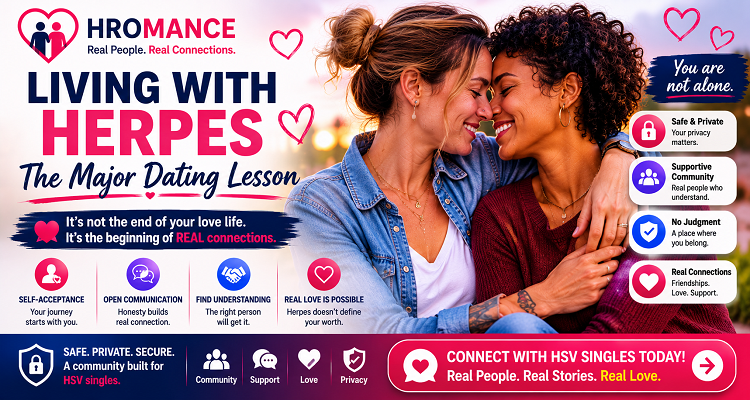
Dating already comes with uncertainty, but Living With Herpes adds a layer most people never expect to navigate. At first, it can feel like everything changes—how you see yourself, how you approach relationships, and how you interpret other people’s reactions. But over time, many people realize something important: the diagnosis doesn’t end your dating life, it reshapes it.
What follows is a grounded look at real experiences, emotional shifts, and practical lessons people learn while dating with HSV. It’s not about perfection—it’s about honesty, confidence, and learning to move forward without shrinking yourself.
The first shock: what changes after diagnosis
Most people describe the early stage as confusion mixed with fear. There’s usually a strong assumption that dating is “over” or will become extremely limited. That belief slowly breaks down with experience.
What actually happens is more subtle. You become more selective, more aware of boundaries, and more intentional with communication. Many people later say this phase was the beginning of better relationships overall.
This is where Living With Herpes Dating Lessons start to form—not from theory, but from lived reality.
The biggest shift: honesty changes everything
One of the most powerful realizations is that secrecy creates more stress than the condition itself. People who eventually find stable relationships often point to disclosure as the turning point.
It’s uncomfortable at first. There’s fear of rejection, awkward timing, and overthinking every word. But with practice, it becomes just another honest conversation.
This is where many people begin to understand Herpes Disclosure Dating Tips in a real, practical way—choosing calm moments, keeping explanations simple, and not over-apologizing for something medical and manageable.
Interestingly, rejection does happen, but it becomes easier to accept because it filters out mismatched partners early.
Dating confidence doesn’t disappear—it rebuilds
A common misconception is that confidence is permanently damaged after diagnosis. In reality, it often rebuilds in a more stable form.
People stop relying on validation from everyone they meet. Instead, they start focusing on compatibility and emotional safety. That shift leads to healthier choices and more meaningful connections.
Many describe this stage as developing Dating Confidence With Herpes that feels more grounded than before—less performative, more real.
The stigma is real—but not universal
There’s no denying the presence of stigma. Misunderstandings about HSV still exist in dating culture, and they can affect early interactions.
But what surprises many people is how varied the responses are. Some react with ignorance, others with compassion, and many simply don’t see it as a dealbreaker once they understand the facts.
Over time, people begin to separate fear-driven reactions from informed ones. That separation is key to understanding Herpes Stigma in Dating Life without letting it define personal worth.
Real experiences from the community
Hearing others’ stories often helps reduce isolation. Across different support groups and communities, similar themes appear again and again.
One person shared:
“I thought I would never date again. But after a few honest conversations, I realized the right people don’t treat it like a life sentence.”
Another noted:
“The hardest part wasn’t the diagnosis—it was learning how to talk about it without shame.”
Someone else reflected:
“I lost a few connections, but I gained relationships where I didn’t have to hide anything.”
These Herpes Dating Experience Stories highlight a shared truth: the emotional journey matters as much as the medical condition.
Relationships become more intentional
One unexpected outcome is that relationships often improve in quality. People tend to communicate more clearly, move more slowly, and prioritise emotional compatibility.
Casual dating may feel more complicated at first, but long-term relationships often become more stable. Partners who stay tend to be more understanding and emotionally mature.
This is where Herpes And Modern Relationships begin to look different—not defined by fear, but by communication and mutual respect.
What actually makes dating easier over time
There’s no single trick, but patterns do emerge:
People who do well often:
- Keep disclosure simple and calm
- avoid over-explaining or self-blame
- Focus on emotional compatibility, not universal approval
- accept that rejection is part of dating in general, not just HSV
Over time, these habits reduce anxiety and improve outcomes.
Many describe this evolution as part of HSV Dating Challenges and Lessons, where emotional growth becomes just as important as practical dating skills.
Community perspective: You’re not alone in this
Across support communities and forums, a consistent message appears: isolation is the hardest part, not dating itself.
Groups often emphasize that HSV is far more common than people realize, and most individuals learn to manage it without major disruption to relationships.
Community-based discussions also reinforce practical coping strategies and emotional reassurance. This shared understanding becomes a foundation for Positive Herpes Dating Journey experiences that feel less isolating over time.
What people wish they knew earlier
Looking back, many people say they spent too much time assuming the worst. A few common reflections include:
- The diagnosis feels heavier than it actually is in long-term dating life
- The right partner responds with curiosity, not judgment
- Confidence returns with experience, not perfection
- Silence creates more anxiety than honesty
These insights shape real-world Dating With Herpes Advice that comes from lived experience rather than theory.
Testimonials from lived experiences
Here are a few more anonymized reflections:
“I stopped trying to hide it and started focusing on how I connect with people. That changed everything.”
“The fear was worse than the reality. Most conversations were far more normal than I expected.”
“I learned that rejection is not personal—it’s just compatibility showing itself early.”
“My relationships now feel more honest than anything I had before my diagnosis.”
These voices reflect a broader pattern of Herpes Relationships, Real Experiences that evolve with time and confidence.
FAQ
Is dating still possible with herpes?
Yes. Many people date, form long-term relationships, and build families while managing HSV.
When should I disclose it to a partner?
Most people choose before sexual intimacy, in a calm and private setting where both can talk openly.
Does everyone reject after disclosure?
No. Responses vary widely. Many people respond with understanding or ask questions before deciding.
Can relationships be normal?
Absolutely. HSV does not prevent emotional connection, trust, or long-term commitment.
How do I stop feeling anxious about dating?
Experience helps. So does focusing on compatibility rather than universal approval.
Final thoughts
Living With HSV changes how you approach dating, but it doesn’t take away the possibility of a meaningful connection. If anything, it often filters out superficial interactions and brings clarity faster.
What begins as uncertainty slowly turns into self-awareness, communication skills, and stronger emotional boundaries. Over time, people stop seeing it as a limitation and start seeing it as part of their story—not the whole story.
The real lesson isn’t about the condition itself. It’s about learning that honesty, patience, and self-respect matter far more in relationships than perfection ever will.