
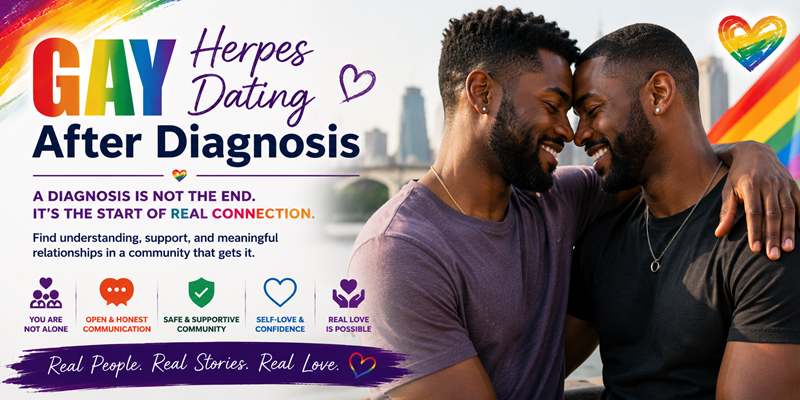
A herpes diagnosis can feel life-changing, especially when it comes to dating and relationships. Many gay men initially worry that they will never experience love, intimacy, or meaningful connections again. Those feelings are understandable, but they are often driven by stigma rather than reality. Millions of people around the world live with herpes, including many in the LGBTQ+ community, and they continue to build strong, healthy, and fulfilling relationships.
A diagnosis is a medical condition, not a reflection of your character or your ability to love and be loved. Building confidence after a diagnosis takes time, education, and self-compassion. Understanding the facts about herpes helps replace fear with confidence and allows you to approach dating with a healthier mindset. This Herpes Dating Guide explains how gay men can move forward after a diagnosis, communicate honestly, overcome stigma, and develop meaningful relationships based on trust and respect.
Understanding the Emotional Impact
Learning that you have herpes often brings a mix of emotions. Some people experience shock, sadness, embarrassment, or anxiety about future relationships. Others worry about rejection or how potential partners might react. These emotions are common, but they do not last forever. As people learn more about herpes and connect with supportive communities, they often realize that life after diagnosis is far more hopeful than they first imagined.
Herpes is one of the most common viral infections worldwide. Many individuals never develop noticeable symptoms, while others experience occasional outbreaks that are often manageable with medical treatment and healthy lifestyle habits. The physical condition is usually much easier to manage than the emotional stress caused by misinformation and social stigma.
Moving Forward with Confidence
One of the biggest steps toward successful dating is rebuilding self-confidence. Your diagnosis does not reduce your value, your personality, or your ability to have meaningful relationships. Confidence grows when you stop defining yourself by herpes and instead focus on your strengths, interests, goals, and emotional qualities.
Practicing Confident Gay Dating means approaching relationships with honesty while remembering that everyone has challenges in life. The right partner will appreciate openness, maturity, and respect more than perfection. Confidence develops through experience, education, and positive conversations rather than waiting for fear to disappear completely.
Building Healthy Relationships
Successful relationships are built on communication, respect, trust, and shared values. A herpes diagnosis does not prevent anyone from creating loving partnerships. Many couples include one partner with herpes and another without it, while others both live with the condition. What matters most is how couples communicate and support one another.
Creating Positive Gay Relationships begins with emotional honesty. When both people respect each other and communicate openly, herpes becomes only one small part of the relationship rather than its defining feature. Trust develops through consistency, understanding, and mutual care, allowing relationships to grow stronger over time.
Having the Disclosure Conversation
Talking about herpes may feel intimidating, but honest communication builds trust. Most healthcare professionals recommend discussing herpes before sexual intimacy so both people can make informed decisions. Many individuals are surprised to discover that conversations often go much better than expected.
Good Herpes Disclosure Tips focus on remaining calm and informative rather than apologetic. Explain that herpes is common, manageable, and that there are effective ways to reduce the possibility of transmission. Share the steps you take to protect your partner, including following medical advice, avoiding intimacy during outbreaks, and practicing safer sex. Give your partner time to ask questions and process the information without pressure. A respectful conversation often strengthens emotional trust instead of weakening it.
Dating in Today’s Digital World
Modern dating offers more opportunities than ever before. Many gay men meet partners through dating apps, LGBTQ+ communities, mutual friends, and social events. Some individuals feel comfortable discussing herpes after establishing trust, while others prefer connecting within communities where people already understand the realities of living with herpes.
Gay Herpes Dating communities provide an environment where people share similar experiences, making conversations about sexual health feel more natural. These communities also reduce anxiety by creating spaces where understanding and empathy are encouraged. Regardless of where someone meets a potential partner, authenticity remains the foundation of every successful relationship.
Handling Rejection in a Healthy Way
Rejection is part of dating for everyone, regardless of health status. Sometimes people simply are not compatible, and occasionally someone may decide they are not comfortable dating a person with herpes. Although this can be disappointing, it should never be viewed as a measure of personal worth.
Every honest conversation builds confidence and improves communication skills. Instead of focusing on rejection, remember that dating is about finding someone whose values, goals, and emotional maturity align with your own. A partner who respects honesty and appreciates transparency is far more likely to build a lasting relationship.
Creating Healthy Communication
Open communication strengthens every relationship. Couples who discuss emotional needs, expectations, sexual health, boundaries, and future goals generally build stronger partnerships. Healthy Gay Love depends on mutual respect rather than avoiding difficult conversations.
Discussing herpes should feel similar to discussing any other aspect of personal health. When both partners approach the conversation with maturity and accurate information, fear gradually gives way to understanding. Honest communication creates emotional safety, allowing intimacy to grow naturally over time.
The Importance of Emotional Well-Being
A herpes diagnosis can affect mental health as much as physical health. Anxiety, self-doubt, and isolation are common during the early stages of adjustment. Speaking with trusted friends, LGBTQ+ support organizations, counsellors, or healthcare professionals can help reduce these feelings significantly.
Finding Gay Singles Support reminds people that they are not alone. Hearing success stories from others living with herpes often restores hope and provides practical advice for managing dating, relationships, and emotional well-being. Supportive communities encourage acceptance, confidence, and resilience.
Finding Reliable Herpes Relationship Help
Professional guidance can make a significant difference for individuals and couples adjusting to a herpes diagnosis. Many healthcare providers, therapists, and LGBTQ+ organizations offer Herpes Relationship Help that focuses on communication, emotional well-being, disclosure planning, and healthy intimacy.
Working with knowledgeable professionals often helps reduce anxiety while improving confidence in dating and relationships. Their guidance supports healthier conversations and stronger emotional connections.
Community Source
Trusted organizations continue to provide valuable education and support for people living with herpes. The American Sexual Health Association (ASHA), the Centers for Disease Control and Prevention (CDC), local LGBTQ+ community centers, sexual health clinics, and public health organizations offer evidence-based information about herpes management, disclosure, treatment options, and relationship health. Community discussion groups and moderated online forums also help reduce stigma by allowing individuals to learn from others who have successfully built happy relationships after diagnosis.
Frequently Asked Questions
Can gay men have successful relationships after a herpes diagnosis?
Yes. Thousands of gay men living with herpes enjoy loving, long-term relationships built on honesty, trust, and communication.
What is the best time to disclose herpes?
Most healthcare professionals recommend discussing herpes before sexual intimacy so both partners can make informed decisions together.
Is herpes a barrier to finding love?
No. Herpes does not prevent meaningful relationships. Confidence, communication, and mutual respect play a much greater role in successful dating.
Are there communities for Gay Herpes Dating?
Yes. Several online communities and support groups provide safe spaces where people living with herpes can connect, share experiences, and build relationships.
How can I reduce transmission risk?
Following medical advice, taking antiviral medication when recommended, avoiding intimacy during outbreaks, and practicing safer sex all help reduce the risk.
Where can I find support?
Healthcare providers, LGBTQ+ organizations, local community centers, sexual health clinics, and reputable herpes education organizations provide reliable information and emotional support.
Final Thoughts
A herpes diagnosis does not define your future, your relationships, or your ability to experience love. With the knowledge provided in this Herpes Dating Guide, honest communication through effective Herpes Disclosure Tips, and the confidence gained from Confident Gay Dating, it is entirely possible to build Positive Gay Relationships filled with trust and respect.
Connecting with Gay Singles Support, accessing Herpes Relationship Help, and embracing Healthy Gay Love can transform uncertainty into confidence. Every Gay Love Journey is different, but countless people have shown that happiness, companionship, and lasting relationships remain completely achievable after a herpes diagnosis.