
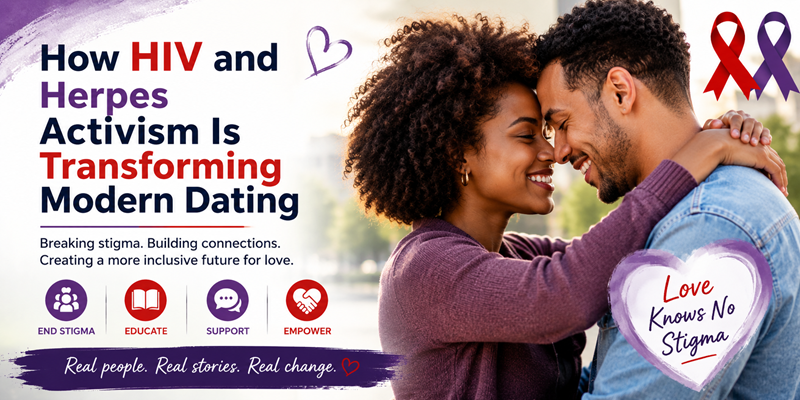
Living with HIV or herpes (HSV) no longer means putting your dating life on hold. Thanks to years of advocacy, education, and community support, people are challenging outdated stereotypes and helping create a more accepting dating culture. HIV and herpes activism has improved access to reliable health information, reduced stigma, and encouraged meaningful relationships built on honesty and trust.
From awareness campaigns to online communities and personal stories, activism continues to change how people understand HIV and herpes in modern dating.
What Is HIV and Herpes Activism?
HIV and herpes activism is a movement focused on education, awareness, healthcare access, and equal treatment for people living with these conditions.
Advocates work to educate the public, challenge myths, encourage regular testing, promote treatment options, and support respectful conversations about sexual health. Their efforts help create an environment where individuals feel more confident in building relationships without fear of unfair judgment.
Why Stigma Has Been a Major Dating Challenge
Although medical knowledge has advanced significantly, social stigma continues to affect many people living with HIV or HSV.
Common concerns include fear of rejection, misunderstanding caused by misinformation, reduced self-confidence, social discrimination, and feelings of isolation.
Activism addresses these challenges by replacing myths with facts. As public understanding improves, more people recognize that a medical diagnosis does not define someone’s character, personality, or ability to build a healthy relationship.
Education Is Changing Public Perception
Education has become one of the most powerful tools in reducing stigma.
Modern awareness campaigns explain how HIV treatment allows many people to live long, healthy lives and how herpes can often be effectively managed with antiviral medications and healthy lifestyle habits. Public education also highlights ways to reduce transmission risks and encourages informed conversations between partners.
As accurate information becomes more widely available, outdated misconceptions continue to fade.
Open Communication Builds Stronger Relationships
Successful relationships depend on honesty and trust.
Advocates encourage open conversations about sexual health because transparency often creates stronger emotional connections. Discussing a diagnosis with care and respect allows both partners to make informed decisions together.
Helpful disclosure practices include choosing an appropriate time, communicating honestly, sharing medically accurate information, answering questions openly, and respecting each person’s feelings and choices.
Many couples discover that honest communication strengthens their relationship rather than creating distance.
Online Communities Are Creating Safe Spaces
The internet has transformed the dating experience for many people living with HIV and herpes.
Support groups, educational forums, and specialized dating communities provide welcoming environments where individuals can connect with others who understand their experiences. These communities offer emotional encouragement, practical dating advice, educational resources, friendship, and inspiring success stories.
Feeling understood often reduces anxiety and increases confidence when meeting new people.
Personal Stories Help Break Down Stigma
Real-life experiences have become one of the strongest forces behind modern activism.
People who openly discuss living with HIV or herpes demonstrate that they build successful careers, develop loving relationships, get married, raise families, travel, and enjoy fulfilling lives.
These stories replace stereotypes with authentic experiences while giving hope to others facing similar challenges.
Medical Advances Have Changed Dating
Healthcare has made remarkable progress over the past several decades.
Effective HIV treatment allows many individuals to achieve viral suppression, which greatly reduces the risk of sexual transmission when treatment is followed consistently under medical supervision.
For herpes, antiviral medications may reduce outbreaks, lessen symptoms, and lower the chance of transmission. Regular healthcare and informed decision-making allow many couples to maintain healthy relationships with confidence.
Medical progress continues to improve both physical health and emotional well-being.
Social Media Has Expanded Awareness
Social media has become an important platform for health education and advocacy.
Healthcare professionals, nonprofit organizations, advocates, and individuals regularly share educational content, personal experiences, relationship advice, mental health resources, and encouraging success stories.
Greater visibility helps normalize conversations about HIV and herpes while reducing unnecessary fear and misinformation.
Mental Health Plays an Important Role
Living with stigma can affect emotional well-being, making mental health support an important part of overall wellness.
Many organizations encourage counseling, peer support groups, and conversations with trusted healthcare professionals. These resources help people build confidence, improve communication skills, reduce anxiety, strengthen relationships, and develop greater self-acceptance.
Confidence and emotional well-being contribute to healthier, more successful relationships.
The Future of Inclusive Dating
Modern dating continues to become more inclusive.
Growing awareness, better healthcare, stronger communities, and ongoing advocacy are helping create an environment where kindness, respect, honesty, and emotional compatibility matter far more than a medical diagnosis.
Future improvements are expected to include expanded public education, increased healthcare access, continued stigma reduction, and more supportive dating communities for people living with HIV and herpes.
Conclusion
HIV and herpes activism has transformed modern dating by replacing fear with education, isolation with community, and stigma with understanding. Public awareness campaigns, medical advances, supportive communities, and honest communication continue to empower people living with HIV or HSV to build meaningful relationships.
A diagnosis should never define a person’s value or limit their opportunities for love. As education continues to improve and stigma continues to decline, modern dating becomes more welcoming, respectful, and inclusive for everyone.
Frequently Asked Questions
Can people living with HIV have healthy relationships?
Yes. With appropriate medical care, consistent treatment, and honest communication, many people living with HIV enjoy healthy, long-term relationships.
Can people living with herpes have successful dating experiences?
Absolutely. Many individuals living with HSV build lasting relationships, marry, and start families. Open communication and proper management help partners make informed decisions together.
Why is HIV and herpes activism important?
Activism promotes education, reduces stigma, improves healthcare awareness, encourages respectful conversations, and supports equal opportunities in relationships.
How can someone support HIV and herpes awareness?
Learn accurate medical information, avoid spreading myths, treat everyone with respect, support awareness organizations, and encourage compassionate conversations about sexual health.